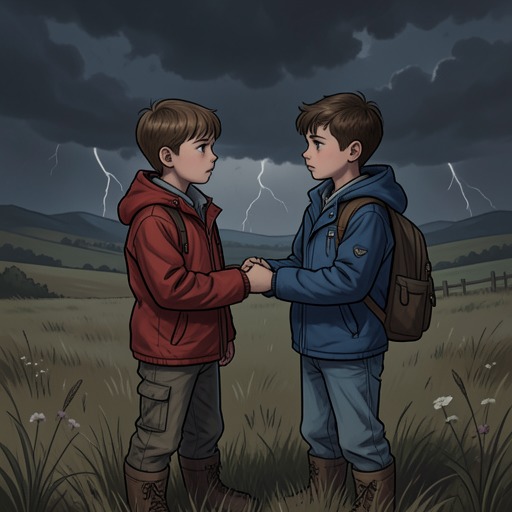
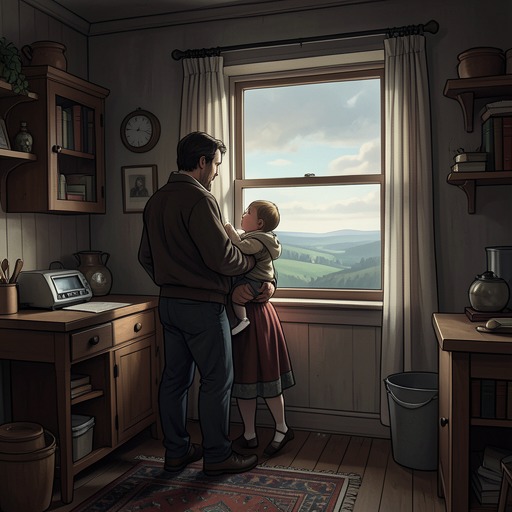
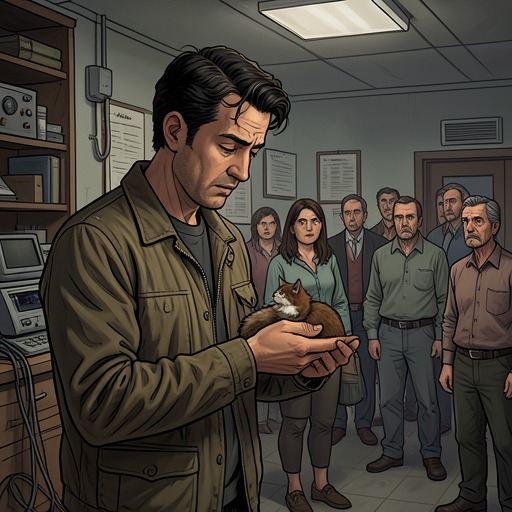
the Conroy farmstead
The Passage (Justin Cronin Edition)The Conroy farmstead is an abandoned homestead in Utah that becomes a temporary home for Theo Jaxon, Mausami Patal, and their infant, Caleb. Its importance lies in the contrast between ordinary acts of shelter—stacking firewood, feeding a dog, sleeping beside a newborn—and the violence that reaches the barn. When Peter Jaxon and his companions arrive, the farmstead also becomes a place of return and mourning, where the dead are buried and remembered as people rather than reduced to what they became.
Discovery and Domestic Life
During the first days at the farmstead, Theo searches the house and its surroundings for traces of the former occupants. Photographs make him wonder whether the people who lived there had been happy, but the house yields no further pictures. He eventually checks the abandoned car, where a dashboard compartment holds maps and a leather wallet. A motor-vehicle card identifies the family as the Conroys, including David Conroy of Provo, Utah; Theo shares the discovery with Mausami. The name gives the empty property a human history, even though the family’s lives there remain largely unknown.
Theo and Mausami make the homestead habitable through work that is both practical and intimate. Theo hauls and splits wood, gathering deadfalls from the woods by the river; the saw he finds is ruined by corrosion, but the axe works, and he stacks the fuel in the barn and beneath the eaves under a plastic tarp. He rises before dawn to make a fire so Mausami will not have to wake in a freezing house. The setting holds both hardship and a newly discovered sense of scale: during the first week, Theo stays awake on the porch while Mausami sleeps, watching the stars and feeling sadness as each dawn ends the night. The farmstead’s daily labor does not erase the danger outside, but it gives the couple a routine and a place to care for one another.
That fragile household expands when a thin, shaggy dog appears. Mausami names him Conroy, playfully prompting him to nod as if he recognizes the name, and insists on bringing him inside despite Theo’s reluctance. He races through the rooms, claims the sofa, devours fish and potatoes fried in lard, and drinks water before settling back down. His matted fur and burrs suggest a long spell outdoors, but his condition also indicates that people had cared for him before. Mausami bathes him with their precious soap, carefully working the mats from his silvery coat; Theo lifts the sodden animal from the tub while Mausami kneels to wrap him in a blanket. These close, unhurried acts make the farmstead feel briefly like a home rather than merely a refuge.
Attack and Unexplained Rescue
The domestic calm breaks when Theo finds the barn door ajar, though he remembers closing it. A quiet rustling from inside makes him freeze and listen. The discovery leads to an attack in the barn, where Theo and Mausami shelter in the car with their baby. The incident leaves the family alive, but neither can give a complete account of how they survived.
Mausami hears the shotgun fire and later sees a viral dead on the barn floor. She assumes Theo shot it; Theo has no memory of doing so, and the gun lies several meters away, beyond his reach. His eyes were closed when he heard the shot, and the next thing he remembers is Mausami calling his name in the dark. Mausami believes she must have reached the shotgun and fired the saving shot. Yet the footprints Theo found in the barn point to a possible third person, whose arrival at the precise moment of danger and subsequent disappearance cannot be explained. No further prints or evidence are found. The farmstead’s shelter thus carries an unresolved uncertainty: the family survives, but the apparent intervention that saved them has no identifiable rescuer or motive.
Return and Reunion
Peter’s party approaches the farmstead from the south, with Sara Fisher driving the Humvee and Peter watching from above through binoculars. The group has fuel for the journey: near Blanding, they had driven into a large depot with two dozen rust-streaked tanks, making a return route seem possible if they could find other usable supplies and the Humvee held out. But as Sara drives slowly among the little houses, Peter sees a scene that appears unchanged from the group’s earlier discovery of the place: empty, abandoned, and still. He expects Theo and Mausami to have heard the engine and come out. When no one appears and the main house remains silent, Alicia Donadio offers to go in; Peter refuses, taking the responsibility himself.
The search first yields an empty, undisturbed bedroom. In the second, Peter finds Theo and Mausami asleep on the large bed. Mausami lies turned away, her black hair spread over the pillow and a blanket around her shoulders; Theo lies stiffly on his back with his left leg splinted from ankle to hip. Between them, the tiny face of Caleb peeks from the opening in his heavy swaddling. Theo wakes, smiles through broken teeth, and greets the unexpected visitors. The stillness that had seemed to announce another loss gives way to a reunion: the family has survived and welcomed a child, though Theo is injured and the circumstances of their survival remain unexplained.
Graves and Remembrance
After the reunion, Mausami’s first request is that Conroy be buried. She has been unable to do it herself and has left his remains where he died for three days while caring for Theo and Caleb. Peter carries what remains of the dog to the yard of graves, where Hollis Wilson and Michael Fisher dig a hole beside the others and mark its perimeter with stones. The grave follows the same simple practice as the surrounding burials, placing the dog within the family’s landscape of loss rather than treating his death as incidental.
Galen Strauss’s burial makes the farmstead a place of moral recognition as well as refuge. Peter and Alicia Donadio roll Galen’s corpse onto a tarp and drag it away from the house, intending to burn it. Mausami objects: although Galen became a viral, he had once been her husband, and she asks that he be buried with the others. The party honors her request. On the second day after their arrival, everyone gathers in the yard except Theo, who remains in bed. Sara Fisher proposes that each person tell a story about Galen. The task is difficult because most of them had not known him well or liked him, but they manage to recall moments when he was funny, loyal, or kind.
As the stories accumulate, the burial changes what the group can say about the person beneath the viral body. Peter recognizes that the gathering has acknowledged something that cannot be undone: the remains may belong to a viral, but the one they bury was a man. Amy Harper Bellafonte and Greer witness the ritual. Mausami speaks last, holding the sleeping Caleb. She reveals that Galen had been far braver than others thought and had concealed how badly he could see, too proud to admit the extent of his impairment. She regrets deceiving him about her pregnancy and thinks he may have come to the farmstead because he wanted to be a father; she believes he might have been a good one. His burial does not resolve the questions of what brought him there or what home meant to him, but it restores his human identity within the community’s memory.
Significance of the Place
The farmstead’s rooms, porch, barn, and yard each hold a different part of the group’s experience. The porch is where Theo discovers the beauty of the night sky; the house shelters the new family and later gives Peter the shock of finding them alive; the barn holds the threat of the attack and the mystery of the unseen footprints; and the yard becomes the setting for graves and testimony. Domestic refuge and danger are not separate here: the same property that makes warmth, food, and family life possible also contains unexplained violence and death.
The Conroys themselves remain largely absent, known through photographs, the name on David Conroy’s identification card, and the house and car they left behind. That incomplete history contrasts with the more deliberate remembrance the visitors create for Conroy the dog and Galen. At the farmstead, belonging is not established by a complete account of the past. It is made through practical care, burial, and the difficult act of telling what can still be remembered.